

My husband John and I thought we were temporarily relocating to Florida for six weeks, but we ended up staying three months.
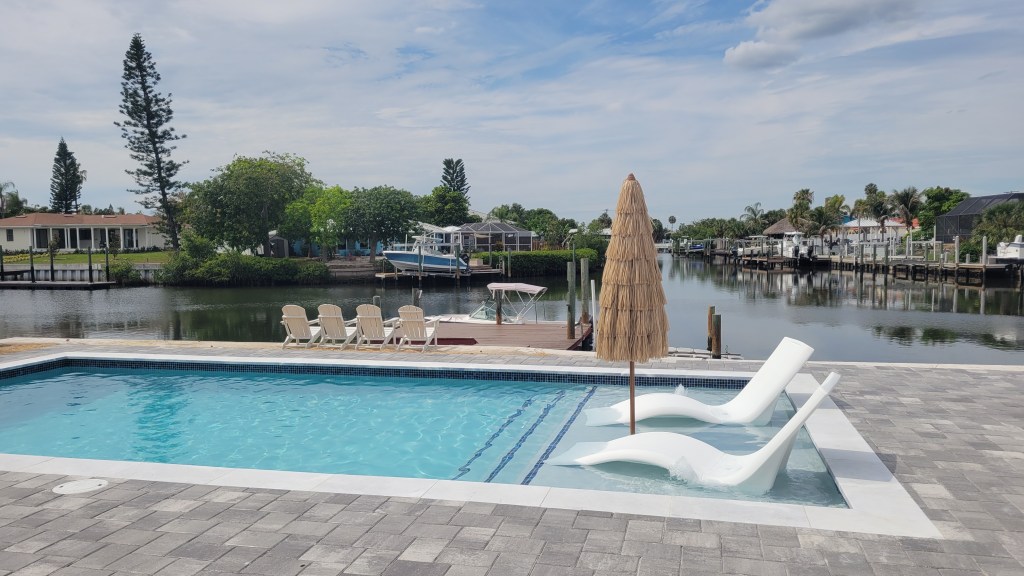
We own a short-term rental in Apollo Beach, FL, and finally took the plunge on adding a pool to the property. (No pun intended.) John wanted to oversee the pool construction project, and we both work from home, so we decided to stay at the house for the duration of the project—which we were told would take about six weeks.
Truly, it is a blessing that we have the flexibility to uproot our lives and live someplace else for an extended period of time without using PTO. For that I am grateful!
But, after a week or so in Florida—and very limited pool progress during that time—we quickly realized that our six-week plan was at least a few weeks too short. Two months seemed more likely. Maybe three.
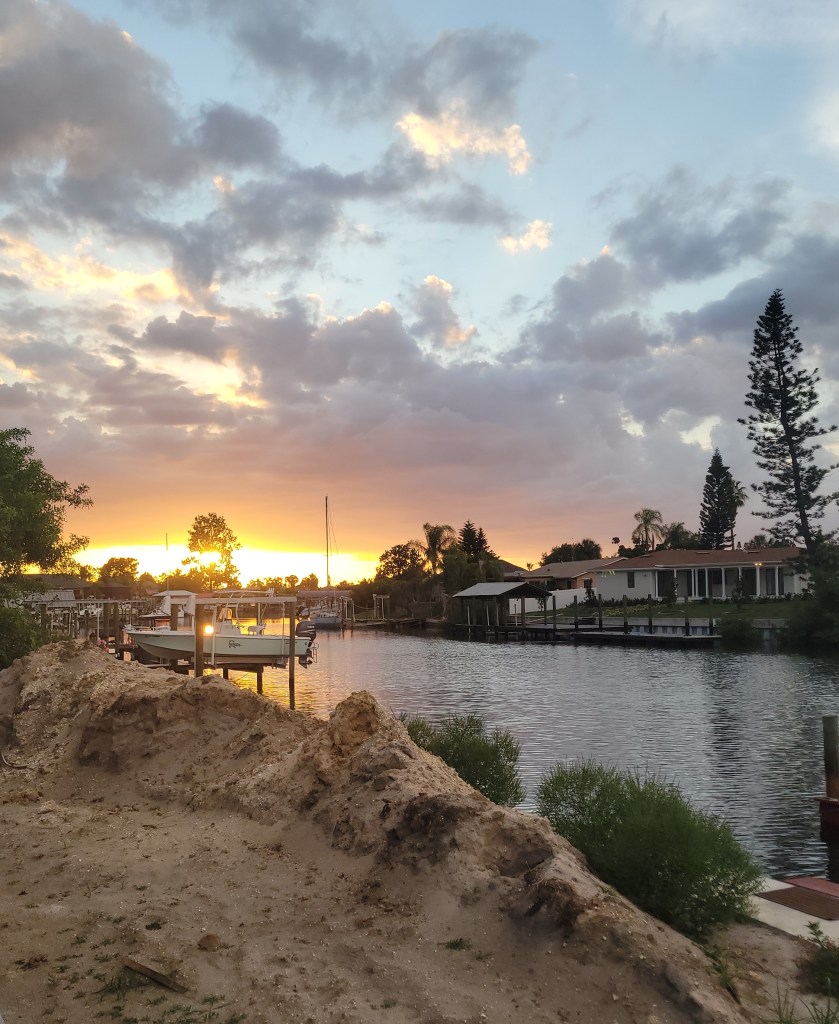
And three it was. We stayed in Florida all of April, May, and June.
As someone who thrives on routine, I quickly established one in Florida. And, as someone who also once lived in Florida for five years, I quickly settled back into the Florida lifestyle. In fact, after about two weeks, it felt like I lived in the Sunshine State all over again.
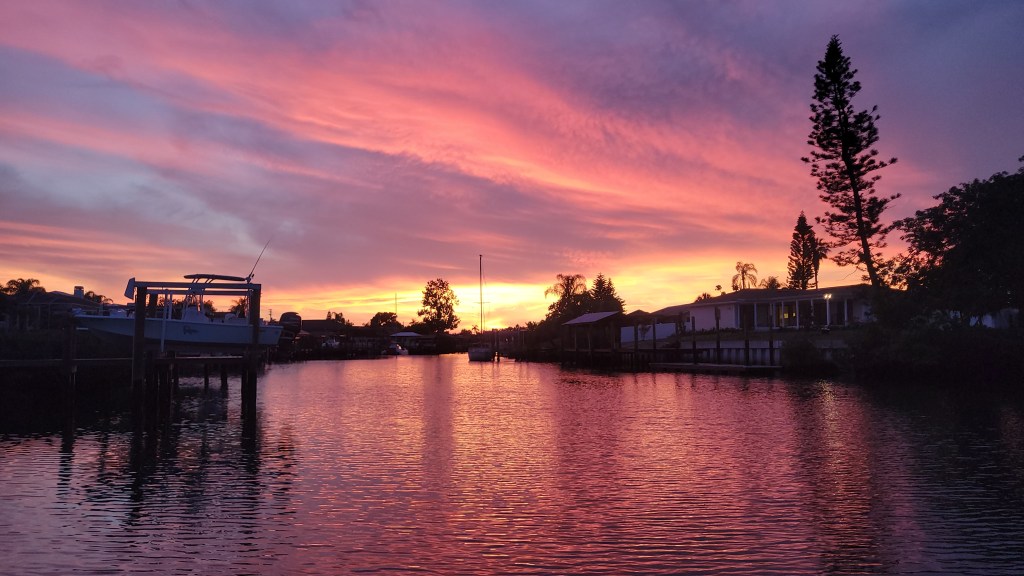
On one hand, my prior Floridian residency made it easier to navigate the unknowns that came with relocating for an undetermined length of time. On the other, staying in Florida far longer than usual made it harder to think about leaving.
At some point, I started to wonder… How hard will it be to go back home? And what if I don’t want to?
Of course, not going back to Knoxville was never an option, and that truth kept me grounded. Still, part of me dreaded the yet-to-be-determined date we would return to our “real” Tennessean lives.

If you’ve ever lived someplace else temporarily, you probably know what I’m talking about. Maybe you attended college in a different state or studied abroad. Maybe you took a short-term job assignment across the country or a long-term missions trip to another country. Or maybe, you work remotely (like me) and you’ve embraced a more nomadic lifestyle.
Even if you can’t relate to my experience, I bet you’ve felt the anxiety of adjusting to a new routine or the uncomfortable uncertainty of an open-ended plan. It’s not easy, right? It definitely wasn’t easy for me. Yet, even as I wrestled with not knowing how long our lives would be in limbo, I also saw the challenge as a chance to grow.
And after three months, I’d like to think I did—or, at least, I learned to be more flexible and open-handed with my life.

What I Learned from Our Long-Term Stay in Florida
1. Letting go of the plan forced me to live in the present
Funny how that works. The more I accepted the fact that I didn’t know how long we’d be in Florida, the more I was able to simply enjoy the everyday without expectations or the need to control every detail. Instead of focusing on the temporary nature of our situation, I started thinking about it with a present perspective. This is where we are right now.
2. I can live with less
Obviously, we did not bring everything we own with us to Florida. We packed essentials, random items like dumbbells, and a fraction of our clothing, shoes, and accessories. The house in Apollo Beach is also smaller than our home in Knoxville, so we lived with less space.
But we didn’t just survive. We were completely fine. In fact, I went home on a mission to purge my closet. And I did.
3. Creating a new routine helped me to slow down
Before we left Tennessee, I decided this extended trip would be the perfect season to unplug a bit. Post less on social media. Take a break from podcasting. Write less. Read more books. Spend more time outside. But would I actually do it?
Surprisingly, doing less and relaxing more was easier than I thought because I couldn’t just default to my usual routine. Everything was different, which required my brain and body to respond differently.
Can I create a new routine at any time or place? Yes. Absolutely. But, for someone like me who thrives on routine, it’s astronomically easier change it up when there literally is no other option.
4. What ifs are a waste of time
There’s an old Yiddish proverb that states, “If you want to make God laugh, tell Him your plans.” But my brain likes to know the plan, and, in Florida, it was hard not to plan ahead too far.
My brain also likes to consider all the “what if” possibilities and prepare for each scenario, just in case.
What if something happens at our house in Knoxville while we’re not home?
What if we miss an important piece of mail while it’s on hold?
What if I need something I didn’t bring with me?
I don’t know about you, but a majority of my what ifs never happen. I was reminded of this during our three months in Florida, where I had about zero control over most of the scenarios that played out in my mind. All the mental energy I typically spend overanalyzing and overthinking what could happen rarely benefits me in any way.
So, I started taking the what ifs captive and let them go. One by one.
I like how the second part of 2 Corinthians 10:5 (ERV) puts it: “We also capture every thought and make it give up and obey Christ.”
Every thought includes our plans. Let’s go back to that Yiddish saying. I like to think it’s true because God does have a sense of humor. But I want to share what the Bible actually has to say about planning to stick to the actual truth. So here goes…
One of my go-to verses on this topic is Proverbs 16:9. The ERV reads, “People can plan what they want to do, but it is the Lord who guides their steps.”
And these verses, James 4: 13-15 (ERV), give this idea a real-world perspective:
13 Some of you say, “Today or tomorrow we will go to some city. We will stay there a year, do business, and make money.” Listen, think about this: 14 You don’t know what will happen tomorrow. Your life is like a fog. You can see it for a short time, but then it goes away. 15 So you should say, “If the Lord wants, we will live and do this or that.”
Two phrases stand out to me here:
- “You don’t know what will happen tomorrow.”
- “If the Lord wants, we will live and do this or that.”
That’s the truth. Our reality. Whether we’re talking plans, routines, present, future, and every what if.
We don’t know.
God does know.
And there is peace in that.
Do I still like to know the plan and live a fairly routine and predictable life? Yes.
But this season taught me to rely less on these tendencies that typically bring me comfort, and instead trust the God of comfort who is with me wherever I go, whatever I do, and however long it takes.


